
Did you know that the term “go to grass” means to collapse mortally?
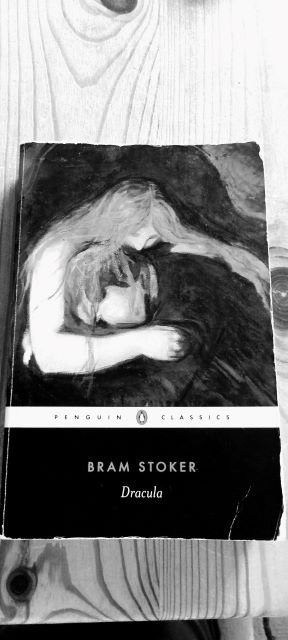
This is one of many terms that appears in Bram Stoker’s Dracula. The original version of this classic novel was published in 1897. However, I have read the 1993 version that was edited with an Introductions and Notes by Maurice Hindle and has a Preface by Christopher Frayling.
Jonathan Harker, a solicitor, visits Transylvania to help Count Dracula purchase a house in England but soon realises he is trapped and notices strange things. Soon after, abnormal events unfold in England as one of Dr Seward’s patients in a mental hospital, Renfield, starts talking about the coming of his Master; a ship wrecks with no sign of any crew and two strange puncture marks appear on the neck of a woman. Now, Dr Seward, Professor Van Helsing, Jonanthan Harker, Lord Gambling and Quincey Morris start a quest to annihilate the Un-Dead before they loose not one but two loved ones to the vampire. Will they succeed or will the Count bring immortal terror to England?
One of the most unique features of Dracula is that the story is completely made up of the letters, journals and diaries of the main characters. However, the book does not feature any diaries or journals belonging to Quincey Morris or Arthur Holmwood, who does still write and receive letters. Part way through the story, Arthur’s father dies which is why he is suddenly referred to Lord Gambling and not Arthur Holmwood. At first, this seemed to be a minor detail, but the new status of Arthur helps the group in their pursuit of the vampire.
One theme of Dracula is science vs superstition as no one believes Professor Van Helsing about Lucy being a vampire because it should be scientifically impossible. The overall main theme is good vs evil: the good living must defeat and kill the vampires or “the devil’s Un-Dead” as Van Helsing referred to them at the end of CHAPTER XVI.
Due to Dr Seward having a phonograph diary and trains being the primary method of transportation in the novel, Dracula is obviously set in our past, which was likely Bram Stoker’s present.
I really enjoyed Dracula overall, but I personally don’t like all the references to God and religious beliefs. However, these do provide a weakness for vampires that wouldn’t really make sense outside of religion: a cross is regularly used to keep vampires back.
Chapters one to five are probably the best chapters as they describe strange details and actions of the count such as sharp teeth and climbing on walls and unusual events including locals holding up crosses and Jonathan finding the Count in a coffin during the day, presumably completely dead until “the head turned, and the eyes fell upon [Jonathan], with all their blaze of basilisk horror”. In these chapters, Stoker effectively creates mysterious, tense and slightly scary atmospheres and moods.
As previously mentioned, this version was edited with an Introductions and Notes by Maurice Hindle These notes are a useful addition to the book as they explain old terms, and references to books and Shakespeare plays.
I would recommend this classic novel to those aged at least 13-years old who are looking for a classic horror novel. Furthermore, the book has quite a lot of information on Stoker before and after the story, making the 1993 version perfect for those also keen to learn about the author of this famous novel.